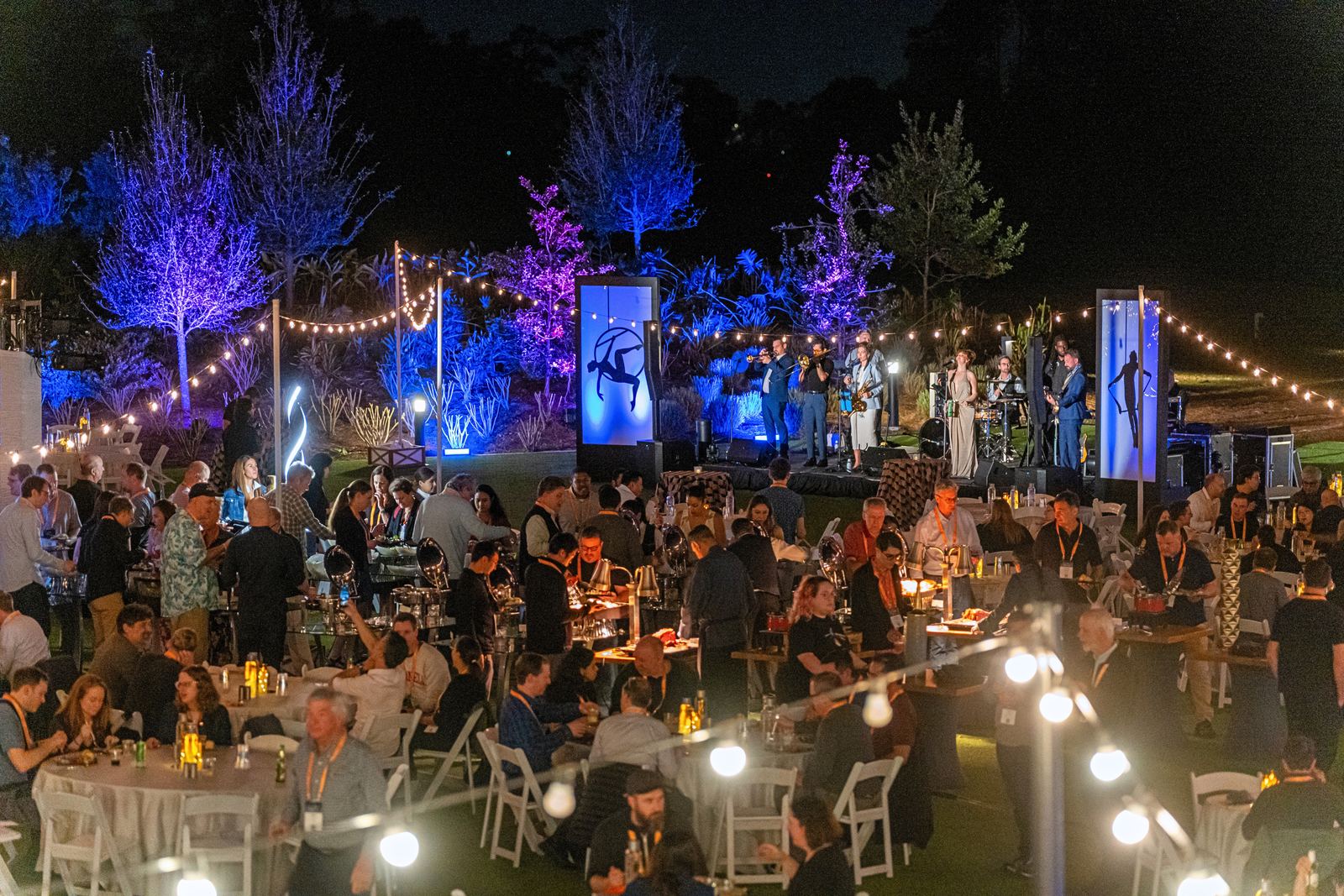

This is the preeminent genome science and technology conference for top global researchers, leaders and innovators.
April 4 - 7, 2027
Meeting
This is a scientific conference focusing on the global impact of breakthrough innovations made possible through agricultural genomics.
September 14 – 16, 2026
Bringing together leading genomic researchers, healthcare professionals, and healthcare industry stakeholders to usher in a new era of precision medicine.
AGBT is the world-renowned not-for-profit provider of three prestigious conference and networking events for the leading luminaries and change-makers of the life sciences and global biotech community.
AGBT delivers a trifecta of preeminent conferences and networking events for the world’s top genome science and technology researchers, leaders, and innovators to share the latest advances, discoveries, and breakthroughs with influential peers and key decision-makers.
By providing opportunities for the global scientific community and technology industry to gather and collaborate in casual, intimate settings, AGBT functions as a key player in advancing DNA sequencing technologies, driving novel applications, and furthering experimental and analytical approaches for genomic studies in the public and private sectors.
Among our attendees are heads of internationally regarded labs and institutions, C-suite executives of life science companies, Wall Street analysts, and media representatives.
Regardless of their role, AGBT brings together those with a shared commitment to pioneering the frontiers of genome science and technology forging a new future and better world.
General Meeting 2026 Featured Speakers

Elinor Karlsson
Elinor Karlsson, PhD, is an associate professor of Genomics and Computational Biology at UMass Chan Medical School and Director of Vertebrate Genomics at the Broad Institute of MIT and Harvard. […]
Barbara Engelhardt
Barbara E Engelhardt is a Senior Investigator at Gladstone Institutes and Professor at Stanford University in the Department of Biomedical Data Science. She received her B.S. (Symbolic Systems) and M.S. […]

Adam Phillippy
Dr. Adam Phillippy is director of the Center for Genomics and Data Science Research at the National Human Genome Research Institute. His lab develops and applies computational methods for the […]

William Pao
William Pao is a physician-scientist whose career has spanned academia, industry and biotech. He started his career as a thoracic oncologist, lab researcher and clinical investigator at Memorial Sloan-Kettering Cancer Center in New York and then Vanderbilt University in Nashville, where he also […]

Emma Teeling
Prof. Emma Teeling is an international leader in the cross-cutting fields of mammalian phylogenetics and comparative genomics, with particular expertise in bat biology. She established the Laboratory of Molecular Evolution and Mammalian Phylogenetics in 2005, […]

Hilary Finucane
Hilary Finucane is an Assistant Professor at Massachusetts General Hospital and Harvard Medical School, and an Associate Member of the Genetics Program at the Broad Institute’s Stanley Center for Psychiatric […]

Tomas Marques-Bonet
Over the past fifteen years, Tomas has applied primate genomics to illuminate human evolution, with direct relevance for conservation genomics. In 2023, his team helped generate genomes for half of the world’s primate species, creating a […]

Chris Jiggins
Chris Jiggins is Professor of Evolutionary Biology at the University of Cambridge and has expertise in insect genomics and studies of adaptation. His work has led the rise of Heliconius butterflies to become a textbook example […]

Dan Rokhsar
Dr. Rokhsar joined the DOE Joint Genome Institute in 2000 as the founding Associate Director for Computational Genomics, and led the computational efforts directed towards the sequencing, annotation, and analysis […]

Elaine Mardis
Elaine Mardis, PhD is co-Executive Director of the Steve and Cindy Rasmussen Institute for Genomic Medicine at Nationwide Children’s Hospital and holds the Rasmussen Nationwide Foundation Endowed Chair in Genomic Medicine. She also is a Professor of Pediatrics at The […]

Hernán Morales
Hernán Morales studied Biology at UNAM, Mexico, and completed an MSc at the University of Groningen, Netherlands. He earned his PhD from Monash University, Australia, and joined the Globe Institute […]

Jack Gilbert
Professor Jack A Gilbert earned his Ph.D. from Unilever and Nottingham University, UK in 2002 and received his postdoctoral training at Queens University, Canada. From 2005-2010 he was a senior scientist at Plymouth Marine Laboratory, UK; and […]

Job Dekker
Job Dekker received his undergraduate and graduate training at Utrecht University in The Netherlands. As a post-doctoral fellow in the laboratory of Nancy Kleckner at Harvard University, he developed chromosome […]

Katie Hinde
Associate Professor Katie Hinde is core faculty in the Global Health program in the School of Human Evolution and Social Change and the Center for Evolution and Medicine at Arizona State University. Hinde earned a PhD in […]

Marylyn Ritchie
Dr. Marylyn D. Ritchie is the Chief Artificial Intelligence Officer for the MUSC Enterprise, Director of a new Center for Al, as well as Associate Dean for Artificial Intelligence and Director of the […]

Megan Dennis
Dr. Megan Dennis is an Associate Professor in the Department of Biochemistry and Molecular Medicine in the UC Davis School of Medicine. She is an affiliate of the UC Davis MIND Institute and Associate Director of Genomics in the UC Davis Genome Center. […]

Neville Sanjana
Neville Sanjana, PhD, is a Core Faculty Member at the New York Genome Center and Professor in the Departments of Biology and of Neuroscience and Physiology at New York University. As a bioengineer, Dr. Sanjana has developed high-throughput genome engineering tools […]

Kathryn Paige Harden
Dr. Kathryn Paige Harden is a Professor in the Department of Psychology at the University of Texas at Austin, where she leads the Developmental Behavior Genetics lab and serves as […]

Scott Edwards
Scott Edwards is Alexander Agassiz Professor of Zoology and Curator of Ornithology in the Museum of Comparative Zoology at Harvard University. He came to Harvard in December 2003 after serving as a […]

Tom Gilbert
Tom Gilbert is Professor of Palaeogenomics at the Globe Institute, University of Copenhagen, and Director of the DNRF Center for Evolutionary Hologenomics. Tom received his BA (Biological Sciences) and DPhil […]
General Meeting

Elinor Karlsson, PhD, is an associate professor of Genomics and Computational Biology at UMass Chan Medical School and Director of Vertebrate Genomics at the Broad Institute of MIT and Harvard. Her research integrates large-scale comparative genomics, new sequencing technologies, and community science to investigate disease risk and the evolution of complex traits across species. Dr. Karlsson co-leads the Zoonomia Project, an international effort comparing hundreds of mammalian genomes to identify DNA elements critical for health and survival. She also leads Darwin’s Ark, a global open-data initiative engaging dog and cat owners to study the genetic basis of behavior, morphology, and disease, including cancer. She received her BA in biochemistry/cell biology and BFA from Rice University and her PhD in bioinformatics from Boston University. She completed postdoctoral training at Harvard University and joined UMass Chan in 2014, where she holds the Dr. Eileen L. Berman and Stanley I. Berman Foundation Chair in Biomedical Research.
General Meeting
Barbara E Engelhardt is a Senior Investigator at Gladstone Institutes and Professor at Stanford University in the Department of Biomedical Data Science. She received her B.S. (Symbolic Systems) and M.S. (Computer Science) from Stanford University and her PhD from UC Berkeley (EECS) advised my Prof. Michael I Jordan. She was a postdoctoral fellow with Prof. Matthew Stephens at the University of Chicago. She was an Assistant Professor at Duke University from 2011-2014, and an Assistant, Associate, and then Full Professor at Princeton University in Computer Science from 2014-2022. She has worked at Jet Propulsion Labs, Google Research, 23andMe, and Genomics plc. She has received an NSF GRFP, the Google Anita Borg Scholarship, the SMBE Walter M. Fitch Prize (2004), a Sloan Faculty Fellowship, an NSF CAREER, and the ISCB Overton Prize (2021).
General Meeting

Dr. Adam Phillippy is director of the Center for Genomics and Data Science Research at the National Human Genome Research Institute. His lab develops and applies computational methods for the analysis of massive genomics datasets, focusing on the challenges of genome sequencing and comparative genomics. He is a pioneer of single-molecule sequencing for the reconstruction of complete genomes and is best known for his work on completing the human genome from “telomere to telomere”.
General Meeting

William Pao is a physician-scientist whose career has spanned academia, industry and biotech. He started his career as a thoracic oncologist, lab researcher and clinical investigator at Memorial Sloan-Kettering Cancer Center in New York and then Vanderbilt University in Nashville, where he also served as the Division Chief of Hematology/Oncology. Through senior executive leadership positions at Roche and Pfizer, he oversaw the discovery and development of portfolios of new molecular entities, many of which have been approved, to treat a variety of diseases. He currently is CEO and Co-Founder of a cancer biotechnology company. In addition to serving as an Independent Board Member for Alentis Therapeutics and Immunocore, he is on the Council of Visitors of the Vanderbilt School of Medicine Basic Sciences and he previously served an elected term on the Board of Directors for the American Association for Cancer Research. He is author of the book, Breakthrough: The Quest for Life-Changing Medicines.
General Meeting

Prof. Emma Teeling is an international leader in the cross-cutting fields of mammalian phylogenetics and comparative genomics, with particular expertise in bat biology. She established the Laboratory of Molecular Evolution and Mammalian Phylogenetics in 2005, is a Founding Director of the genome consortium Bat1K and the Full Professor of Zoology, UCD. She has pioneered wild bats as new models of extended healthspan, uniting field, molecular, cellular and genomic studies to uncover how bats slow down expected ageing and resist disease. She has been awarded prestigious personal grants for this research- European Research Council (ERC) Starting grant (2013-2018), a Science Foundation Ireland (SFI), President of Ireland Young Researcher Award (2006-2012), an Irish Research Council (IRC) Laureate Award (2018-2022), an SFI Future Frontiers Award (2020-2025), and an ERC Synergy grant BATPROTECT (2024-2030) as lead PI.
She successfully leads a prolific, internationally renowned research team of typically 10 people and has secured >€18M in research funding since 2005. She has graduated 25 PhD and MSc research students and has supervised >15 postdoctoral research fellows. Her record of leadership and research excellence is demonstrated by her publication record of >170 internationally peer-reviewed papers, 6 book chapters, 4 invited subject reviews. A number of these publications have over-turned conventional paradigms in mammalian biology and therefore have been published in high profile journals such as Nature (n=4), Science* (n=19,*11 Zoonomia Consortium), Proceedings of the National Academy of Sciences (n=6), Nature Communications (n=2), Nature Ecology and Evolution (n=2), Science Advances (n=2), Cell (n=1).
Her high standing in the international community is highlighted by a total citation record of 22,739 citations, h-index 65 (Google Scholar Jan. 2026); prestigious international keynote lectures; invited high profile collaborations such as Genome 10K (includes 64 scientific leaders assembled to sequence 10,000 vertebrate genomes); and, high profile invited public presentations (e.g. TED talk >581,993 views; EU Parliament; World Economic Forum, Davos; BBC’s Science Club with Dara Ó Briain, Royal Institute Christmas Lectures, NOV
A documentary on PBS); nomination to prestigious academic boards and institutes (e.g. Irish Research Council Board, 2015-2022; Member of Royal Irish Academy, 2016; Board of Directors Dublin Zoo 2022-present). She has been awarded Chevalier des Palmes Académiques, 2017 by the French Government; the Murray Lectureship, University of Sydney (2022); Miller Award (2023) North American Bat Research Society, and Commended Irish Research Council Researcher of the Year Award (2023), for her research, University of Michigan, Bennett J. Cohen Award for Research in Aging (2026).
General Meeting

Hilary Finucane is an Assistant Professor at Massachusetts General Hospital and Harvard Medical School, and an Associate Member of the Genetics Program at the Broad Institute’s Stanley Center for Psychiatric Research. Her research develops computational methods to understand how genetic variation drives disease. During her PhD at MIT, she co-developed LD score regression, now widely used to analyze heritability and genetic architecture. Her lab has developed methods to identify causal variants and genes at GWAS loci, including the Polygenic Priority Score (PoPS), and now focuses on the interpretation of coding variation in disease. She is a recipient of the NIH Director’s Early Independence Award and was previously a Hertz Foundation Fellow.
General Meeting

Over the past fifteen years, Tomas has applied primate genomics to illuminate human evolution, with direct relevance for conservation genomics. In 2023, his team helped generate genomes for half of the world’s primate species, creating a foundational resource for biodiversity research, medical genetics, and evolutionary biology. Building on earlier discoveries of human-specific structural variation and great-ape genomic diversity, his laboratory has developed new approaches to interpret the functional impact of regulatory changes across humans and other apes. He has authored more than 230 peer-reviewed papers supported by ERC and NIH funding and has served the community through leadership roles such as Director of the Institute of Evolutionary Biology (UPF-CSIC) and founder of the Barcelona Zoo Cryozoo. He also sits on several international scientific advisory boards; he is a member of the Royal Academy of Sciences in Spain and has received the Barcelona City Award (2024) and the Ramon y Cajal Medal (2025).
General Meeting

Chris Jiggins is Professor of Evolutionary Biology at the University of Cambridge and has expertise in insect genomics and studies of adaptation. His work has led the rise of Heliconius butterflies to become a textbook example of ecological adaptation and the origin of new species. He has used genomics to study genes under selection in a variety of insect species and was recently elected a Fellow of the Royal Society.
General Meeting

Dr. Rokhsar joined the DOE Joint Genome Institute in 2000 as the founding Associate Director for Computational Genomics, and led the computational efforts directed towards the sequencing, annotation, and analysis of three human chromosomes. After successful completion of the human genome project, Professor Dr. Rokhsar ’s team has continued to develop computational methods applicable to the diverse eukaryotic species, which they have applied and refined in the sequencing and evolutionary analysis of over fifty plant and animal genomes. He currently leads the JGI’s Computational Genomics group, and is past lead of the Eukaryotic Genome Program (2010-2019), and JGI Chief Informatics Officer (2013-2016). Dr. Rokhsar joined the faculty of University of California, Berkeley in 1989, as a member of the Physics Department and in 2002 he became a Professor of Genetics, Genomics and Development after his research interests shifted from condensed matter physics to computational biology, genomics and evolutionary biology. Dr. Rokhsar’s research is focused on understanding the origin, evolution, and diversity of plants and animals by combining computational genome analysis, sequence-based genetic methods, and comparative developmental biology. In addition to this evolutionary focus, his work on plant genomics is targeted towards the development of improved biofuel feedstocks and understanding and ultimately assisting the adaptation of plants to changing environments.
General Meeting

Elaine Mardis, PhD is co-Executive Director of the Steve and Cindy Rasmussen Institute for Genomic Medicine at Nationwide Children’s Hospital and holds the Rasmussen Nationwide Foundation Endowed Chair in Genomic Medicine. She also is a Professor of Pediatrics at The Ohio State University College of Medicine. Elaine is an internationally recognized expert in cancer genomics and immunogenomics, with over 550 published manuscripts. She co-led the effort to sequence and analyze the first cancer genome using massively parallel sequencing technology and was integral to large-scale cancer genomics discovery projects including The Cancer Genome Atlas and the Pediatric Cancer Genome Project. Her ongoing research interests lie in the clinical profiling of pediatric cancer DNA and RNA to identify somatic and germline contributors to cancer onset and to characterize the tumor immune microenvironment, with a focus on pediatric cancers and precision oncology. She is principal investigator of an NCI-funded study that performs clinical molecular profiling of pediatric cancers and has evaluated over 4500 cases to-date. Dr. Mardis is the former President of the American Association for Cancer Research. In 2019 she was elected a Fellow of the American Association for Cancer Research and a member of the U.S. National Academy of Medicine.
General Meeting

Hernán Morales studied Biology at UNAM, Mexico, and completed an MSc at the University of Groningen, Netherlands. He earned his PhD from Monash University, Australia, and joined the Globe Institute at the University of Copenhagen as a Marie Curie Fellow in 2019. In 2023, he was awarded an ERC Starting Grant and a FORMAS ECR grant to establish the Evolutionary and Conservation Genomics Group
General Meeting

Professor Jack A Gilbert earned his Ph.D. from Unilever and Nottingham University, UK in 2002 and received his postdoctoral training at Queens University, Canada. From 2005-2010 he was a senior scientist at Plymouth Marine Laboratory, UK; and from 2010-2018 he was Group Leader for Microbial Ecology at Argonne National Laboratory, a Professor of Surgery, and Director of The Microbiome Center at University of Chicago. In 2019 he moved to University of California San Diego, where he is a Professor in Pediatrics and the Scripps Institution of Oceanography, Associate Vice Chancellor for Marine Science, and Director of both the Microbiome and Metagenomics Center and the Center for Soil Health.
Dr. Gilbert uses molecular analysis to test fundamental hypotheses in microbial ecology. He cofounded the Earth Microbiome Project and American Gut Project, as well as is the founding Editor in Chief of mSystems journal. He has authored more than 450 peer reviewed publications and book chapters on microbial ecology. In 2017 he co-authored “Dirt is Good”, a popular science guide to the microbiome and children’s health. Dr. Gilbert founded BiomeSense Inc in 2018 to produce automated microbiome sensors. In 2021 he became the UCSD PI and Consortium Chair for the National Institute of Health’s $175M Nutrition for Precision Medicine program. In 2023 he became President of Applied Microbiology International and won the IFF Microbiome Science Prize, and in 2025 was elected to the American Academy of Microbiology.
General Meeting

Job Dekker received his undergraduate and graduate training at Utrecht University in The Netherlands. As a post-doctoral fellow in the laboratory of Nancy Kleckner at Harvard University, he developed chromosome conformation capture methodology. He is currently an Investigator of the Howard Hughes Medical Institute and Professor in the Department of Systems Biology at the University of Massachusetts Chan Medical School. His laboratory studies how genomes are folded in three dimensions. His work has led to insights into the formation of chromatin loops involved in long-range gene regulation, the organization of the interphase nucleus, the structure of mitotic chromosomes, and general folding principles of genomes. His group pioneered the use of genome folding data for genome assembly. Recently, his lab started exploring chromosome folding mechanisms in organisms with unusual genome
organizations, such as dinoflagellates.
General Meeting

Associate Professor Katie Hinde is core faculty in the Global Health program in the School of Human Evolution and Social Change and the Center for Evolution and Medicine at Arizona State University. Hinde earned a PhD in Anthropology at UCLA in 2008, trained as a post-doc in neuroscience at UC Davis 2009-2011, and began as faculty as an Assistant Professor in Human Evolutionary Biology at Harvard University from 2011-2015. As Director of the Comparative Lactation Lab, she investigates the evolutionary ecology and behavioral biology of mothers, infants, and milk. Decoding mother’s milk contributes to enhanced precision medicine for the most fragile infants and children in neonatal and pediatric intensive care units. Hinde co-edited the book “Building Babies: Primate Developmental Trajectories in Ultimate and Proximate Perspective” and her TED talk “What We Don’t Know About Mother’s Milk” is used by health ministries around the world. Hinde founded and directs “March Mammal Madness,” a month-long public engagement campaign that showcases animals, ecology, and behavior to >1,000,000 learners annually. In 2023, Hinde was inducted as a Lifetime Fellow by the American Association for the Advancement of Science and in 2025 was recognized by the National Center for Science Education with their Friend of Darwin award.
General Meeting

Dr. Marylyn D. Ritchie is the Chief Artificial Intelligence Officer for the MUSC Enterprise, Director of a new Center for Al, as well as Associate Dean for Artificial Intelligence and Director of the Division of Computational Health Sciences and Al in the College of Medicine at the Medical University of South Carolina (MUSC). Dr. Ritchie is also the SmartState Endowed Chair in Translational Biomedical Informatics. Dr. Ritchie is an expert in translational bioinformatics, with a focus on developing, applying, and disseminating algorithms, methods, and tools integrating electronic health records (EHR) with genomics. Dr. Ritchie has over 20 years of experience in translational bioinformatics and has authored over 500 publications. Dr. Ritchie was appointed as a Fellow of the American College of Medical Informatics (ACMI) in 2020. Dr. Ritchie was elected as a member of the National Academy of Medicine in 2021.
General Meeting

Dr. Megan Dennis is an Associate Professor in the Department of Biochemistry and Molecular Medicine in the UC Davis School of Medicine. She is an affiliate of the UC Davis MIND Institute and Associate Director of Genomics in the UC Davis Genome Center.
Megan received a bachelor’s degree in Biochemical Engineering from Michigan State University and a joint Ph.D./D.Phil. in Human Genetics from the National Institutes of Health and the University of Oxford where she studied the genetics of dyslexia. She completed her postdoctoral training focused on genomic structural variation at the University of Washington.
Recent awards include: NIH Director’s New Innovator Award, Sloan Research Fellowship in Neuroscience, NSF CAREER Award, UC Davis Chancellor’s Award.
General Meeting

Neville Sanjana, PhD, is a Core Faculty Member at the New York Genome Center and Professor in the Departments of Biology and of Neuroscience and Physiology at New York University. As a bioengineer, Dr. Sanjana has developed high-throughput genome engineering tools to understand the impact of genetic changes on cancer evolution, viral pathogenesis, drug resistance and the nervous system. Recent work from his lab identified synthetic cell programs to enhance cell therapies for blood cancers and solid tumors and developed new methods to identify causal noncoding variants and their target genes at scale.
Dr. Sanjana is a recipient of the Presidential Early Career Award for Engineers and Scientists, AAAS Wachtel Prize for Cancer Research, the NIH’s New Innovator Award, the Cancer Research Institute Technology Impact Award, the DARPA Young Faculty Award, the Kimmel Scholar Award, the MRA Young Investigator Award, and also is the Leichtung Family Investigator of the Brain and Behavior Foundation. He is a co-founder and advisor to OverT Bio and a member of the Scientific Advisory Board of QIAGEN. Dr. Sanjana holds a PhD in Brain and Cognitive Sciences from MIT, a BS in Symbolic Systems and a BA in English from Stanford University.
General Meeting

Dr. Kathryn Paige Harden is a Professor in the Department of Psychology at the University of Texas at Austin, where she leads the Developmental Behavior Genetics lab and serves as the Director of Clinical Training. Dr. Harden’s research investigates how genetic, epigenetic, and environmental factors combine to influence mental health, personality, and cognition in childhood and adolescence. In addition to conducting empirical research, Dr. Harden is also a science writer and communicator. Her first book, The Genetic Lottery: Why DNA Matters for Social Equality(Princeton University Press), was named a “Top 10” book of 2021 by The Economist magazine and has been translated into nine languages. Her new book, Original Sin: The Genetics of Vice, The Problem of Blame, and the Future of Forgiveness, will be published by Random House in March 2026. For the past 10 years, she has taught Introduction to Psychology as a synchronous massive online class, and she hopes to inspire the next generation of students to be curious about how the genome contributes to the shaping of the self.
General Meeting

Scott Edwards is Alexander Agassiz Professor of Zoology and Curator of Ornithology in the Museum of Comparative Zoology at Harvard University. He came to Harvard in December 2003 after serving as a faculty for 9 years in the Zoology Department and the Burke Museum at the University of Washington, Seattle. His research focuses on diverse aspects of avian biology, including evolutionary history and biogeography, disease ecology, population genetics and comparative genomics. He has conducted fieldwork in phylogeography in Australia since 1987 and conducted some of the first phylogeographic analyses based on DNA sequencing. He did a postdoctoral fellowship in immunogenetics at the University of Florida and gained experience with studying the major histocompatibility complex (MHC) of birds, an important gene complex for interactions of birds and infectious diseases, pathogens and mate choice. An important system for studying these issues is the ongoing epizootic involving House Finches (Haemorhous mexicanus) and the bacterial pathogen Mycoplasma gallisepticum. His work on the MHC led him to study the large-scale structure of the avian genome and informed his current interest in using comparative genomics to study the genetic basis of phenotypic innovation in birds. In the last 10 years Dr. Edwards has helped develop novel methods for estimating phylogenetic trees from multilocus DNA sequence data. His recent work uses comparative genomics in diverse contexts to study macroevolutionary patterns in birds, including the origin of feathers and the evolution of flightlessness.
From 2013-2015 Scott served as Division Director of the Division of Biological Infrastructure at the US National Science Foundation, where he oversaw a staff of 22, an annual research budget of $120M (USD), and managed funding programs focused on undergraduate research, postdoctoral fellowships, natural history collections and field stations, and cyber- and other infrastructure for all areas of biology, from molecular to ecosystem science. He has served as President of three international scientific societies based in the US: the Society for the Study of Evolution, the Society of Systematic Biologists, and the American Genetic Association, each of which publishes a scientific journal and has memberships ranging from 500 – 2500 scientists and students. He has served on the National Geographic’s Committee for Research and Exploration, the Senior Advisory Boards of the NSF-funded US National Evolutionary Synthesis Center (NESCent) and the National Institute for Mathematical and Biological Synthesis (NIMBioS), and on the Advisory Boards of the National Museum of Natural History at the Smithsonian and the Cornell Lab of Ornithology. He oversees a program funded by the National Science Foundation to increase the diversity of undergraduates in evolutionary biology and biodiversity science. He is a member of the American Academy of Arts and Sciences (2009), a Fellow of the American Association of the Advancement of Science (2009), and a member the National Academy of Sciences (2015).
General Meeting

Tom Gilbert is Professor of Palaeogenomics at the Globe Institute, University of Copenhagen, and Director of the DNRF Center for Evolutionary Hologenomics. Tom received his BA (Biological Sciences) and DPhil (Molecular Evolution/ancient DNA) from Oxford University, and then spent 2 years at the University of Arizona working on untangling the origin of the HIV-1 epidemic. In 2005 he moved as a Marie Curie Fellow to the University of Copenhagen, where he has been employed ever since in variously the Niels Bohr Institute, Biological Institute, Natural History Museum of Denmark, and since 2019, the Globe Institute. While for most of his career his work studied the genomic basis of evolution of animals and plants, over the past decade his interests have turned to how microbial partners shape this relationship, and what consequences this might have to us.

The Genome Partnership
The Genome Partnership has been proudly organizing The Advances in Genome Biology and Technology (AGBT) meetings since 1999. The Genome Partnership is a not-for-profit organization and its mission is to advance research, promote education, and expand commerce in genome science and technology.